Advertising history 1890s
Pears soap and the art of persuasion
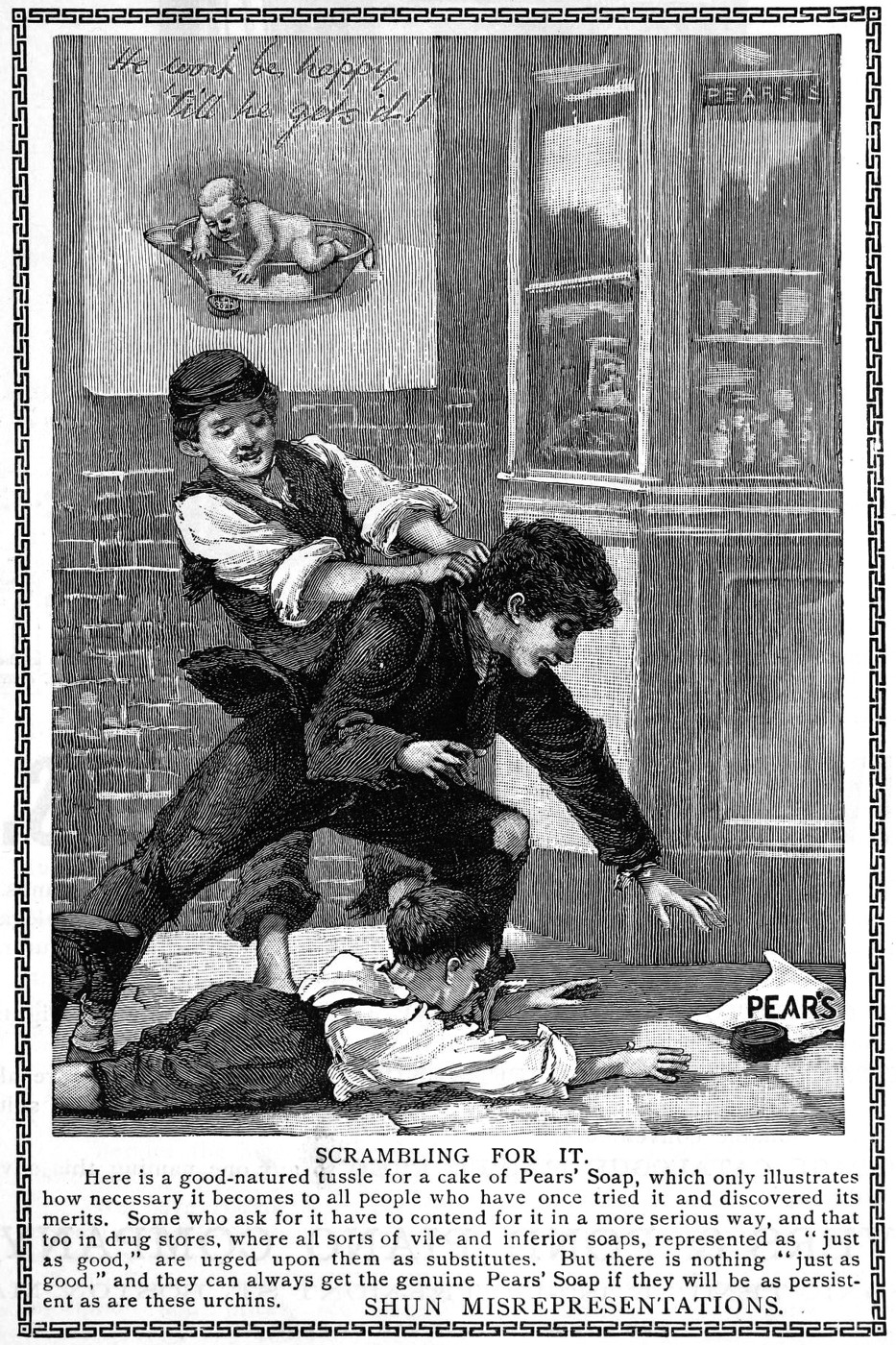
A cake of soap became much more than a household purchase in nineteenth-century advertising. Manufacturers sold ideas about cleanliness, respectability and desirable ways of living alongside the product itself. Pears became especially skilled at attracting attention through pictures and memorable copy. This advertisement appeared in an American magazine in October 1890, carrying a British brand into a transatlantic market. Its crowded shop scene makes demand look contagious. The warning against substitutes then directs that excitement toward a particular name, reminding us that an advertisement’s immediate job was to persuade a buyer.
About the picture
The boys reaching for soap make a lively scene of competition around an ordinary product. The copy’s concern with substitutes turns attention toward brand recognition. Printed advertisements like this helped build markets in which a familiar name and image could matter as much as a shopper’s direct knowledge of the manufacturer.
The history behind it
What the source establishes
The page is valuable evidence of an advertising strategy even when it is weak evidence for actual demand. Its illustration stages a lively contest for a soap package and the words turn that contest into a reason to insist on the branded article. The warning about substitutes explains why the image is there. Neither the children’s behaviour nor the manufacturer’s promotional assurances replace independent sales or comparative testing. The magazine’s October 1890 date is secure, while the depicted shop’s address and any supposed real incident remain unestablished.
Dates, places and close alternatives
October 1890 is the source publication date; the scene has no independently verified event date. The documented context is the American Century magazine, rather than a named street in the illustration. Brand insistence and resistance to substitutes are the argument actually made by the copy.
The advertiser is an interested source
An advertisement can reliably show what its advertiser wanted readers to think and do. That is a substantial historical finding, even when it does not establish market share, product performance or a real street incident. Separate the publication date from any supposed scene date, and identify the speaker behind a promotional assertion. A cautious headline describes the persuasive technique rather than adopting its claims as independently checked news.
A few things to read next
Books for a longer visit, and a few good places to start online. These are ordinary links, with no affiliate commission.
On the bookshelf
Fables of Abundance: A Cultural History of Advertising in America
An account of the cultural promises made by advertising in America, where this page circulated.
Imperial Leather: Race, Gender and Sexuality in the Colonial Contest
Read critically about soap advertising, race, gender and the imperial meanings of cleanliness.
Clean: A History of Personal Hygiene and Purity
The longer history of washing and bodily care behind the advertised ideal.
Read online
Pears (soap)
A starting point for names, dates and related subjects. Follow its references when you want to go further.
Pandemic Objects: Soap
A museum history of soap, including its advertising and associations with status.
To Preserve the Skin in Health
A historical study of skin, health imagery and nineteenth-century consumer culture.
Where the pictures come from
The original records and their individual rights statements are below. The pictures have not been generated or altered for the game.
Pears advertisement, The Century Illustrated Monthly Magazine, October 1890.
The Century Illustrated Monthly Magazine, October 1890, vol. XL / Internet Archive / Wikimedia Commons · October 1890
Public domain in the United States; the item page identifies the 1890 magazine publication as public domain.
History notes and reading lists prepared for Then & Found with AI assistance. The source institutions and authors are not sponsors or endorsers. Suggest a correction or another source


