Public spectacles 1870s
Liberty’s torch at the Philadelphia Centennial
Long before the Statue of Liberty stood in New York Harbor, Americans could climb inside its right arm in Philadelphia. The hand and torch went on display at the Centennial Exposition of 1876, where the United States marked a hundred years of independence with an enormous international fair. Frédéric Auguste Bartholdi’s unfinished monument needed publicity and money. Showing a fragment made its scale imaginable. The completed statue was dedicated a decade later, in 1886, after separate campaigns in France and the United States had paid for the statue and its pedestal.
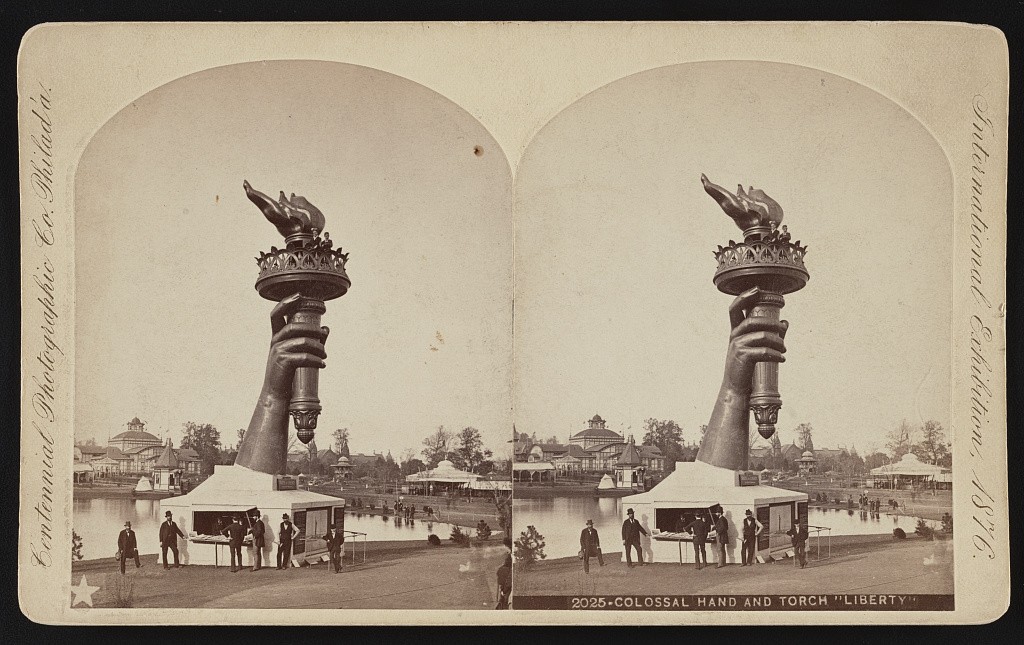
A closer look: A monumental exhibit
Visitors to the 1876 fair encountered an immense hand before there was a finished monument to visit. Bartholdi used this striking fragment to introduce the Statue of Liberty project to Americans. The paired photographs were meant for a stereoscope, which turned slightly different views into an impression of depth.
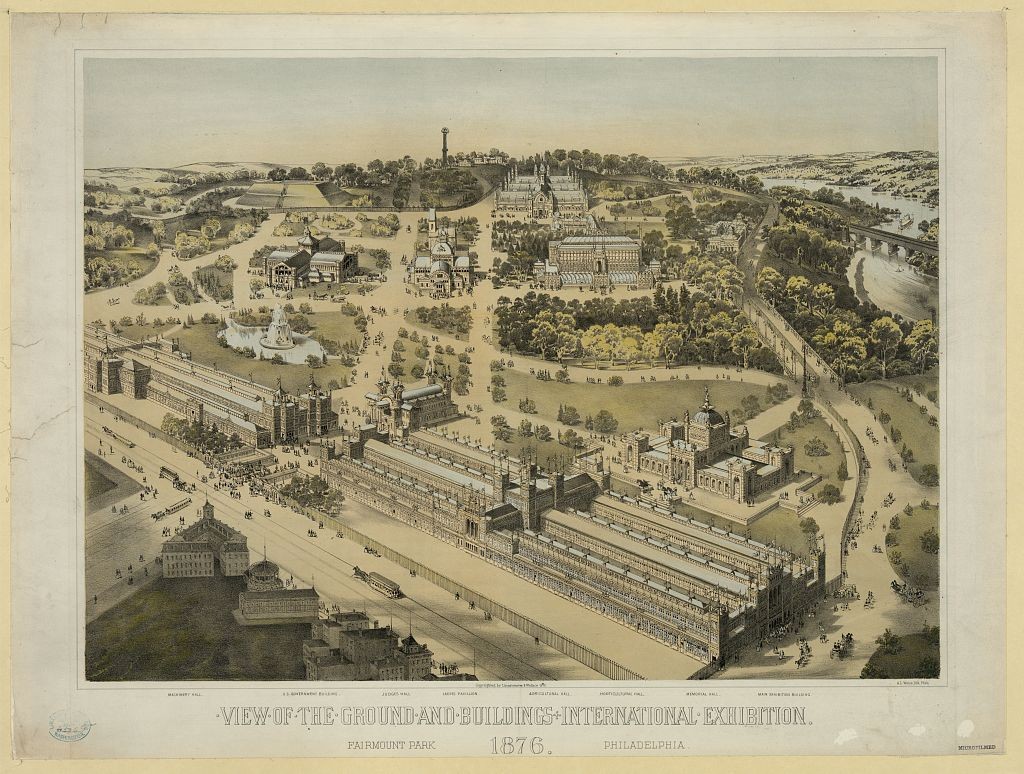
A closer look: A view of the grounds
Fairmount Park became a temporary city of exhibition halls, paths and national displays in 1876. August L. Weise’s view helps explain the torch’s first American setting: a fair built to show manufactured goods and celebrate national progress, rather than the harbor island where the statue eventually stood.
The history behind it
What the archive establishes
This is the 1876 component display at Philadelphia’s Centennial Exposition. The Library of Congress grounds view supplies Fairmount Park, the international exhibition and the year; the stereocard shows the detached hand and torch as an attraction. Its paired panels provide depth, not a construction timeline. The National Park Service chronology separates this episode from the component’s later Madison Square display, the head’s Paris appearance, assembly of the complete statue in France, shipment to New York and the 1886 dedication. New York is therefore a plausible but wrong answer for this exposure. The photograph does not establish that the complete body stood nearby, nor that the display base was the permanent island pedestal. The correct reconstruction uses the captioned grounds artifact and the component’s physical state together.
Date, place and phase
The detached component and the dated exposition print place this in the public-display stage before full assembly, shipment and dedication. The grounds print names Fairmount Park in Philadelphia. Madison Square was a later component display, while Bedloe’s Island became the permanent site. The two artifacts jointly establish an exposition display of a component, not dedication or reassembly of the complete monument.
What the frame leaves open
Later custody does not relocate an earlier exposure. The paired grounds artifact supplies the context for the display documented here. They are the paired views of a stereocard. Their nearly identical content is not a before-and-after sequence. The packet establishes a public display and its context, but contains no ticket ledger. A crowd is not evidence of individual admission arrangements.
A few things to read next
Books for a longer visit, and a few good places to start online. These are ordinary links, with no affiliate commission.
On the bookshelf
The Statue of Liberty: A Transatlantic Story
The French and American politics behind the monument and its changing meaning.
Enlightening the World: The Creation of the Statue of Liberty
How Bartholdi’s project moved from an idea to a funded, constructed statue.
Eyewitnessing: The Uses of Images as Historical Evidence
Useful background on monuments and the images that helped shape their public meaning.
Read online
Statue of Liberty
A starting point for names, dates and related subjects. Follow its references when you want to go further.
Creating the Statue of Liberty
The making, fundraising and assembly of Bartholdi’s monument.
Liberty Island: a chronology
Follow the project beyond the Philadelphia display to its New York home.
Where the pictures come from
The original records and their individual rights statements are below. The pictures have not been generated or altered for the game.
Colossal hand and torch “Liberty,” Philadelphia, circa 1876.
Library of Congress, Prints & Photographs Division · circa 1876
No known restrictions on publication.
View of the Ground and Buildings, International Exhibition, Fairmount Park, Philadelphia, 1876.
Library of Congress, Prints & Photographs Division · 1876
No known restrictions on publication.
History notes and reading lists prepared for Then & Found with AI assistance. The source institutions and authors are not sponsors or endorsers. Suggest a correction or another source


